
Choosing career options after graduation is easier when you compare your interests, skills, financial goals and preferred work environment instead of following trends blindly. A degree can lead to private-sector employment, competitive examinations, professional courses, entrepreneurship, freelancing or further academic study.
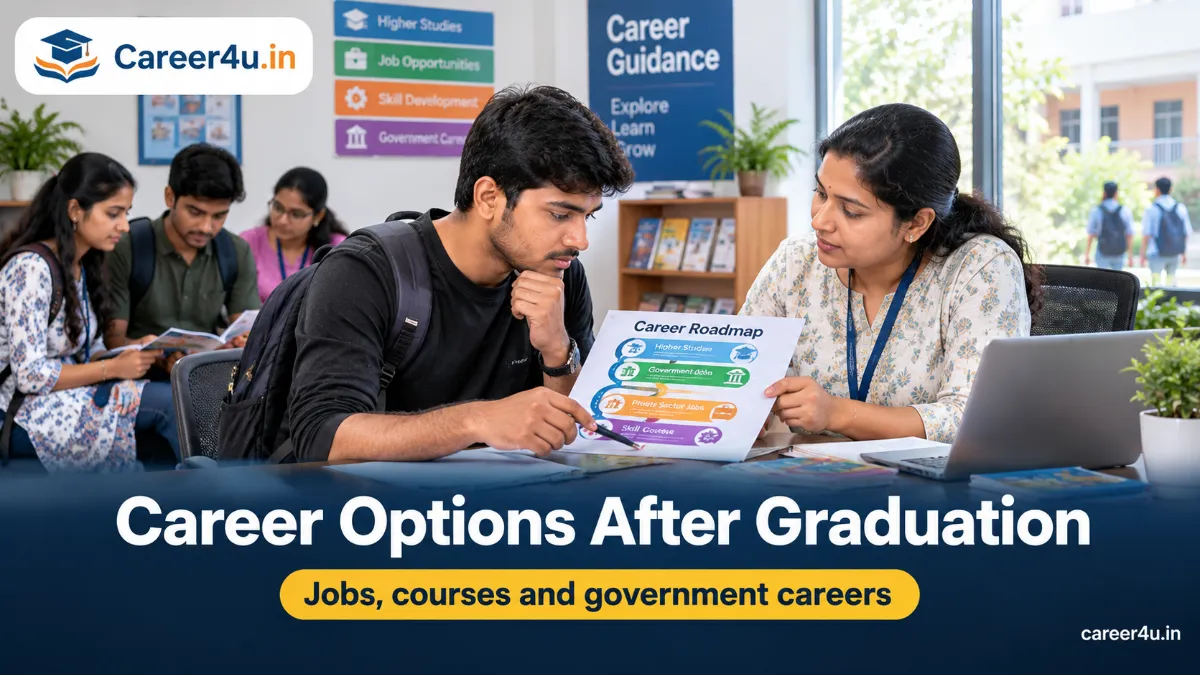
This guide explains practical paths for graduates in India, including jobs, government examinations, courses and higher-income career tracks. It also outlines career options after graduation in India for different interests and goals. The right choice depends on your subject, marks, experience, location and willingness to build new skills.
Career Options After Graduation: Start with Self-Assessment
Before applying for jobs or joining a course, write down the subjects you enjoyed, the tasks you perform well and the type of work you can sustain for several years. A graduate who enjoys analysis may suit data, finance or research roles, while someone who communicates well may prefer sales, teaching, public relations or customer success.
Also consider whether you want a stable routine, remote work, field work, creative work, public service or business ownership. Speaking with working professionals and checking actual job descriptions can give you a more realistic view than relying on salary claims on social media.
Major Career Paths for Graduates
Private-sector jobs
Private companies hire graduates for entry-level roles in operations, sales, customer support, human resources, finance, marketing, content, administration and technology. Some roles accept graduates from any stream, while others require a specific degree or technical skill.
For jobs after graduation, employers commonly look for clear communication, spreadsheet knowledge, problem-solving ability, digital literacy and evidence that you can complete practical work. Internships, projects and apprenticeships can help candidates with little experience stand out.
Professional and specialised careers
Graduates can move into fields such as accounting, law, teaching, counselling, design, financial analysis, software development, cybersecurity, healthcare administration and supply-chain management. These areas may require a professional qualification, licence, entrance examination or portfolio.
Freelancing and entrepreneurship
Writing, graphic design, web development, video editing, tutoring, digital marketing and consulting can be started on a freelance basis. This route offers flexibility but income may be irregular at first. Build a portfolio, use written agreements and maintain records of payments and taxes.
Government Jobs After Graduation
Government jobs after graduation remain popular because they can offer structured recruitment, defined responsibilities and long-term career progression. Graduates may explore central government examinations, state public service examinations, banking recruitment, insurance roles, rail-related examinations, defence officer entries and public-sector organisations.
Recruitment rules vary by examination and post. Always check the relevant official notification for educational qualifications, age conditions, application dates, examination pattern, fees, syllabus and reservation provisions. A graduation degree alone does not make a candidate eligible for every government post.
Which government jobs can I apply for after graduation?
The answer depends on your degree, age, nationality requirements, subject combination and the notification currently open. Common categories include administrative services, banking officers, insurance officers, graduate-level staff positions, state services, assistant roles, teaching posts and technical positions where a specialised qualification is required.
Make a shortlist of examinations rather than preparing for every recruitment at once. Compare the syllabus, number of stages, job duties, transfer possibilities and preparation time before deciding.
Courses After Graduation
Courses after graduation should solve a clear skill or qualification gap. A course is useful when it improves employability, supports a regulated profession or helps you change fields with a structured curriculum.
| Course or route | Useful for | What to check |
|---|---|---|
| Postgraduate degree | Academic depth, research and specialised careers | Recognition, curriculum, placement record and total cost |
| Professional qualification | Accounting, law, management and related fields | Eligibility, examinations, practical training and completion time |
| Short-term certificate | Digital, analytical or job-specific skills | Projects, instructor quality and employer acceptance |
| Government or industry apprenticeship | Practical experience and workplace exposure | Training terms, selection process and future opportunities |
Do not select a course only because it promises a high salary. Check whether employers value the credential, whether the syllabus includes practical work and whether you can complete it alongside work or other commitments.
Best Career Options After Graduation for Different Interests
The best career options after graduation are different for every person. The following broad matches can help you begin research:
- Commerce and finance: accounting, audit support, banking, taxation, financial operations and business analysis.
- Science and mathematics: laboratory work, data analysis, research assistance, quality control, technical support and technology roles after suitable training.
- Arts and humanities: teaching, content, communications, public administration, social research, human resources and civil services preparation.
- Computer-related interests: software testing, web development, data analytics, cloud support and cybersecurity after project-based learning.
- People-focused strengths: recruitment, sales, counselling support, customer success, training and public relations.
These are starting points, not fixed rules. A graduate can change fields by building relevant skills and showing proof of ability through projects, internships or entry-level work.
High Salary Jobs After Graduation: What It Really Takes
High salary jobs after graduation usually require scarce skills, strong performance, relevant experience or a demanding selection process. Technology, finance, consulting, specialised sales and some professional careers can offer strong earning potential, but entry-level pay varies widely by city, employer, degree and skill level.
Instead of chasing a salary figure, focus on a field with a good learning curve. Develop one core skill, one supporting skill and the ability to communicate your work. For example, data analysis becomes more useful when combined with business understanding, while digital marketing improves when paired with writing and performance measurement.
A Practical Decision Framework
- List your assets: record your degree, subjects, technical skills, communication strengths, internships and achievements.
- Choose three possible directions: include one safe option, one skill-based option and one long-term ambition.
- Study actual requirements: read job descriptions and official examination notifications rather than relying on informal advice.
- Test the path: complete a small project, attend a workshop, take an introductory lesson or speak with a practitioner.
- Build a six-month plan: set weekly learning, application and networking targets.
- Review evidence: after a few weeks, assess whether your interest and progress match the chosen direction.
More Updadates about Careers , Education Updates and Jobs
Common Mistakes to Avoid
- Joining an expensive course without checking recognition or outcomes.
- Preparing for several examinations without understanding their different syllabuses.
- Applying to jobs with a generic résumé that does not show relevant skills.
- Ignoring internships, projects and volunteering because they are not full-time jobs.
- Believing that a degree automatically guarantees employment.
- Quitting a current opportunity without a practical financial plan.
What Are the Best Career Options After Graduation?
What are the best career options after graduation? The most suitable choice is the one that matches your ability, interests, financial situation and realistic opportunities. For one graduate, a government examination may be appropriate; for another, a private job followed by skill development or a professional course may lead to better progress.
Join Free Courses : 100% Free & Certification
Frequently Asked Questions
Can I get a job immediately after completing graduation?
Yes. Graduates can apply for entry-level roles, internships, apprenticeships and trainee positions. A strong résumé, basic workplace skills and targeted applications improve the chances of receiving interviews.
Should I work or study after graduation?
Choose work when you need experience, income or clarity about your interests. Choose further study when a specific career requires an advanced qualification or when the course offers clear academic and professional value.
Are government jobs the only stable option?
No. Private companies, regulated professions, teaching, healthcare administration and established businesses can also provide stable careers. Stability depends on the employer, profession, skills and performance.
How can I identify reliable courses?
Check the institution’s recognition, faculty, syllabus, practical projects, placement information, refund terms and reviews from credible learners. Be cautious of guaranteed-job or guaranteed-salary claims.
How long should I prepare for a government examination?
There is no single preparation period for every examination. Read the official syllabus, assess your current level and create a schedule that covers learning, revision and practice while tracking the examination’s official updates.
Can I change my career after graduation?
Yes. Many graduates move into a new field through certificates, postgraduate study, internships, portfolios and entry-level roles. A gradual transition is often safer than making an unsupported jump.
Final Guidance
There is no universal answer to the question of which career is best. Compare opportunities carefully, verify qualification requirements, improve practical skills and make decisions based on evidence. Reassess your plan as you gain experience, because your first job or course does not have to determine your entire working life.